

International regulatory
What the US and the EU ask for, prepared from the design file you already hold rather than rebuilt market by market.
When international regulatory work is the right step
When a device is headed for the US or the EU. Each market sets its own class and route, so the plan is made per market, from the same design file.

Enter the US market
A 510(k) premarket notification against a predicate device, or a De Novo or PMA route where no predicate fits.

Enter the EU market
Technical documentation under EU MDR 2017/745, for a notified body review or for self-declaration where the class allows it.

Choose the markets and their order
A regulatory strategy that compares class, route and evidence in each market before you commit.
What you bring, and what you get back
You bring
- Intended use and target markets
- The design history file and the risk file
- Test reports, including accredited lab reports
- Clinical data or literature, if any
- Candidate predicate devices, if known
You get back
- Regulatory strategy per market
- Classification in each market
- EU technical documentation
- 510(k) submission content
- Draft answers to reviewer questions
One device, a different class in each market
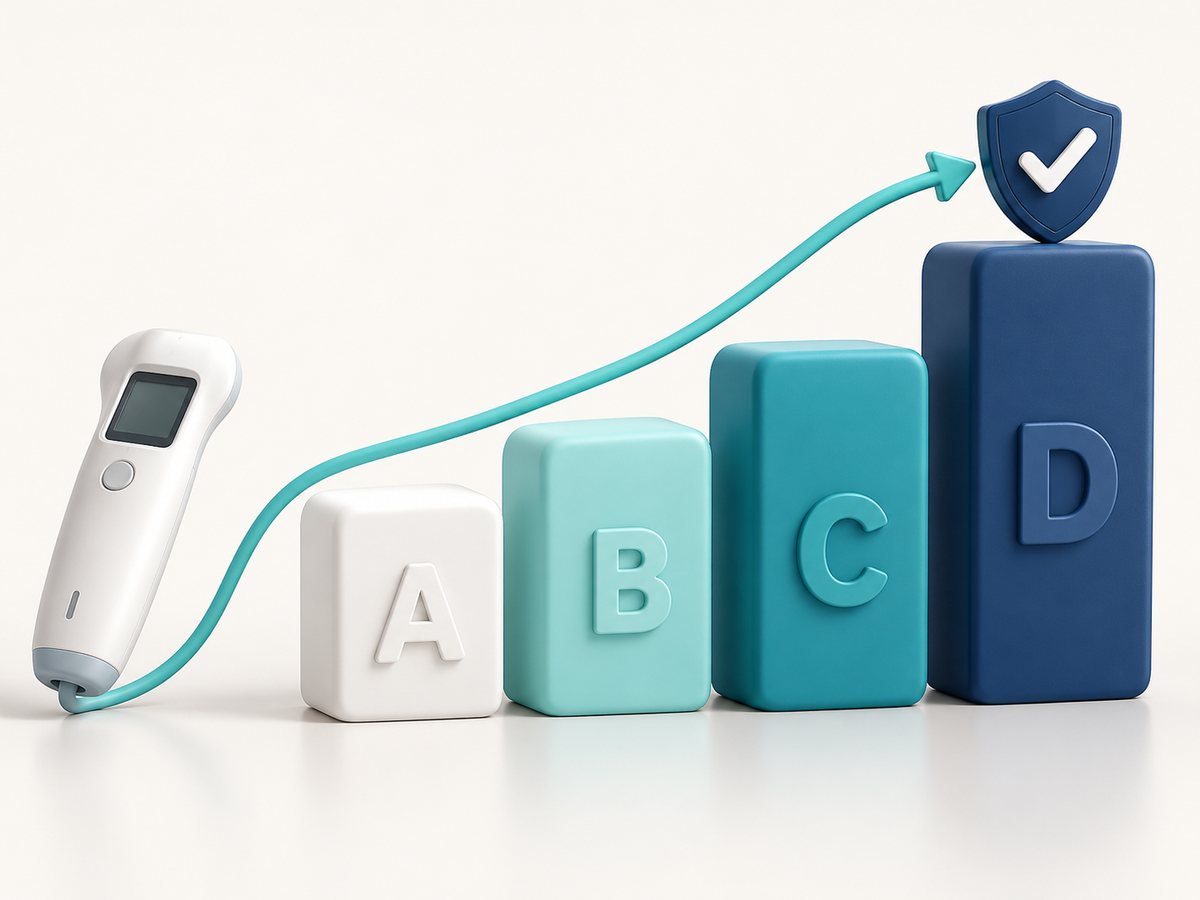
The US uses Class I to III, the EU uses Class I, IIa, IIb and III, and India uses Class A to D. The rules behind each are different, so a class in one market does not carry over to another. The class sets the route: in the US, a 510(k), De Novo or PMA; in the EU, whether a notified body must review the device. Classify in every target market before you plan tests, because each route can need different evidence.
How international regulatory work runs
Questions clients ask
What is a predicate device?
A legally marketed US device that yours is compared with in a 510(k). You show substantial equivalence: the same intended use, and the same technology or differences that raise no new questions of safety and effectiveness.
Does every EU device need a notified body?
No. Most Class I devices are self-declared by the manufacturer. Class I devices that are sterile, have a measuring function or are reusable surgical instruments, and all Class IIa, IIb and III devices, need a notified body.
Can our test reports be used in the US and the EU?
Often, if the lab is accredited and the test follows the version of the standard the regulator recognises. Check the version and the accreditation before testing, not after.
Is ISO 13485 enough for the US and the EU?
It is the basis of the quality system in both, but not the whole of it. Each market adds its own requirements, such as post-market surveillance in the EU and adverse event reporting in the US. See India, US and EU routes.
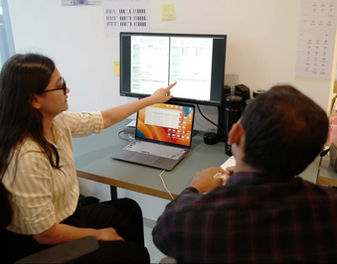
One design file, several markets
Our two sites are certified to ISO 13485. The technical documentation and the 510(k) content are compiled from the same design file that feeds the India dossier.
Devices we have worked on
We name the type of device, not the client. Client work stays confidential. See every device type.
- Pulsed lavage irrigation system for orthopaedic surgery
- Battery-powered bone drill with its docking station
Run under an ISO 13485:2016 quality system certified by TÜV SÜD, certificate 99 400 00046. What it covers.
Not quite you?
Standards this work is done against
- EU MDR 2017/745Annexes II and III, technical documentation
- 21 CFR 807US premarket notification, 510(k)
- ISO 13485Quality management system
- ISO 14971Risk management
The list for a given device, and the edition of each, is set in its regulatory plan.
Where this sits
Also in Co-Design & Develop
Tools for this

Have a question about International regulatory?
Opens the contact form with this service named. Nothing is sent until you press send.